
Manufacturing in the Age of AI: Smart Factories, Digital Twins, and 2 Million Jobs at Risk
Published March 18, 2026 • 5 min read
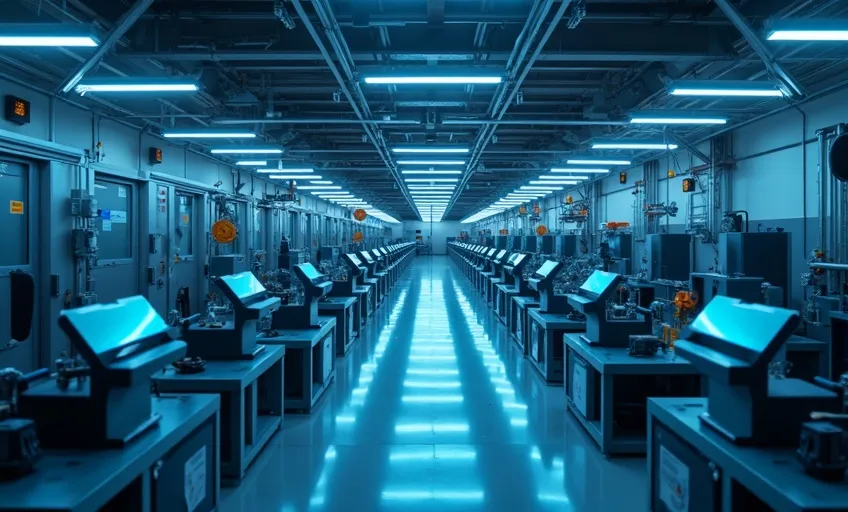
Manufacturing has always been the sector most associated with automation anxiety — and for good reason. The numbers in 2025 and 2026 are stark: roughly 58% of manufacturing tasks are at risk of automation, and analysts project that up to 2 million workers could be displaced by 2026.
Key Statistics
58%
of manufacturing tasks at risk of automation
2M
Workers potentially displaced in manufacturing by 2026
10-15%
CapEx reduction via digital twin simulation (PepsiCo)
27%
Productivity growth in AI-exposed industries 2018–2024
""The irony of the AI age is that the jobs most resistant to automation are the ones that require a human to show up in person and use their hands.""
Digital Twins Are Changing Everything
The most significant development in manufacturing AI is not the robot on the factory floor — it is the digital twin in the cloud. Companies like PepsiCo are using Siemens and NVIDIA technology to simulate entire production lines before building them, reducing capital expenditure by 10–15% and dramatically shortening time-to-production.
The Trades Are Thriving
Here is the counterintuitive finding: while AI is disrupting white-collar and routine manufacturing roles, physical trades are experiencing a labor shortage and wage surge. Plumbers, electricians, HVAC technicians, and skilled maintenance workers are in higher demand than ever — precisely because their work is difficult to automate.